
Everything you need to plan the ultimate dog-friendly campervan adventure across the UK & EU
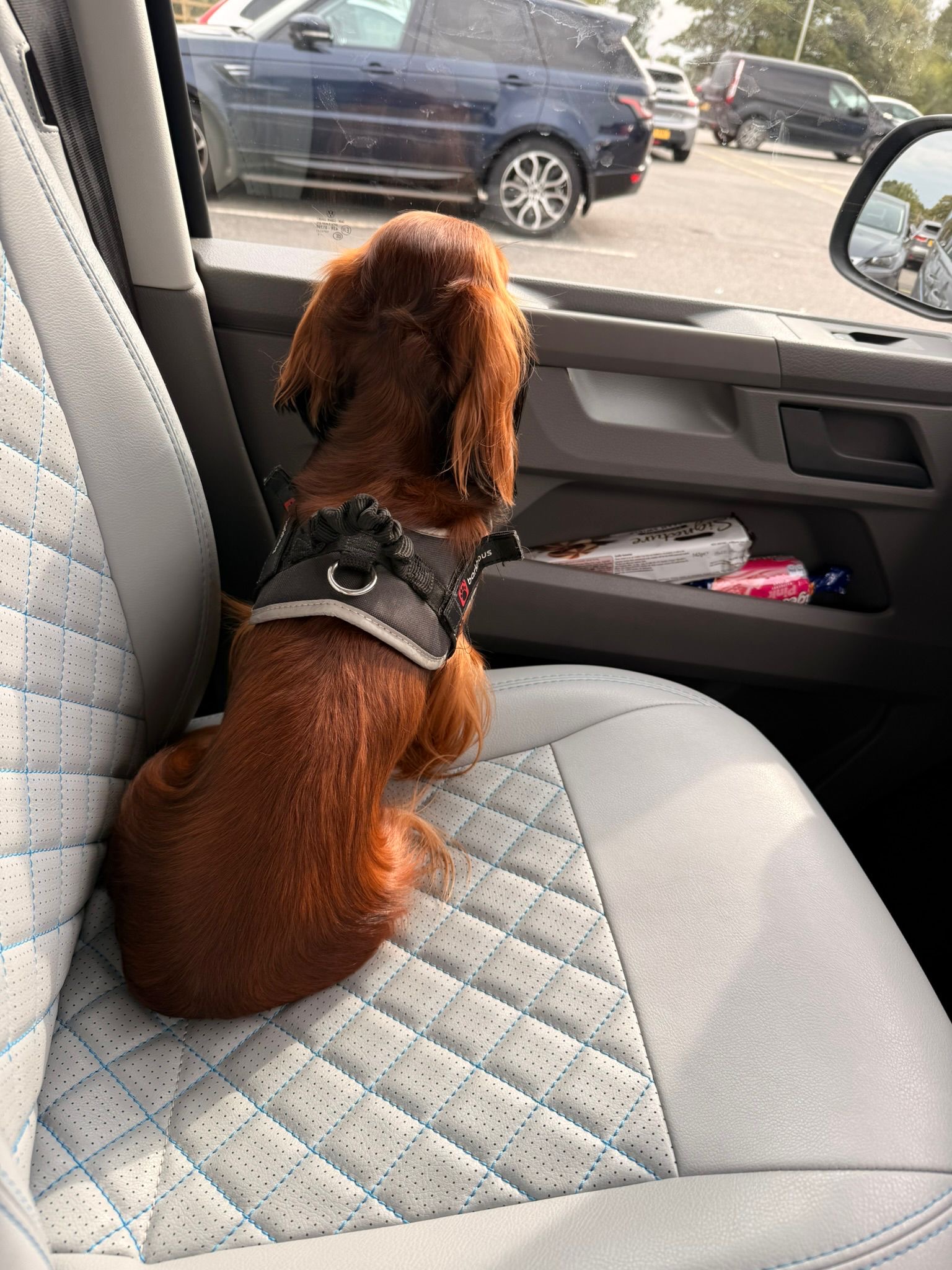
Everything you need to plan the ultimate dog-friendly campervan adventure across the UK & EU
Most people do not realise how far a campervan trip with a dog can actually take you. The Dordogne. The Black Forest. The coast of Northern Spain. It is all possible and we are going to show you exactly how.
Your dog called. They want a campervan holiday.
Here at TC Campers, we know that for many of you, leaving the dog behind simply is not an option. And honestly? We get it. Some of the best campervan trips we have heard about involve a muddy-pawed passenger snoozing across the back seat while the countryside rolls by outside.
The good news is that both the UK and Europe offer brilliant destinations for campervan travel with dogs. Whether you are staying closer to home or heading across the Channel, there is so much waiting for you and your four-legged co-pilot.
We have put together this guide to make your dog-friendly adventure as smooth as possible. The rules you need to know, the best places to stay, what to pack, and everything you need to take your dog to Europe too.
The UK rules you need to know
Dogs on leads: when and where
In most of England, Wales and Scotland, dogs must be kept on a lead in certain areas, particularly:
On all land with livestock (a legal requirement under the Animals Act 1971)
In most National Nature Reserves and designated conservation areas
On many beaches between May and September, always check local signage before you arriveBullet List 4
In National Parks during ground-nesting bird season (typically March to July)
Scotland's wider access rights
Scotland's Land Reform Act gives people (and their dogs) the right to access most land responsibly under the Scottish Outdoor Access Code. Dogs must be kept under close control and on a lead near livestock, farm buildings, and between 1st March and 31st July in areas where ground-nesting birds may be present. The NC500 route passes through some spectacular wild areas where these rules apply.
Beach rules in England & Wales
Beach restrictions vary hugely from one stretch of coast to the next, sometimes seasonal between May and September, sometimes year-round in certain areas. Always check the local council or beach authority website before you arrive. Many beaches have a dog-friendly section even during restricted months.
⚠️ One rule that never changes
Always pick up after your dog. Failing to do so in public spaces can result in a fine of up to £1,000 in England and Wales. Pack more bags than you think you need.
Taking your dog to Europe in a campervan
TC Campers covers you for EU travel, which means you can take our campervans Enola or Fenyx across the Channel and into Europe. It is an incredible experience.
Imagine waking up in a French forest, a Dutch tulip field, or beside a Spanish river with your dog beside you. But there are important rules to follow before you go.
What your dog needs before travelling to the EU
A valid pet passport or GB Animal Health Certificate (AHC). The AHC must be issued by a vet no more than 10 days before you travel and is valid for 4 months for re-entry into Great Britain.
Up-to-date rabies vaccination: your dog must be vaccinated against rabies before the AHC can be issued. If your dog has not been vaccinated, allow at least 21 days after vaccination before travel.Bullet List 3
A microchip: your dog must be microchipped before their rabies vaccination for it to count.
A tapeworm treatment: required for dogs returning to Great Britain. A vet must administer and record this treatment 1 to 5 days before you re-enter the UK.
⚠️ Post-Brexit travel rules have changed
Since Brexit, the old blue EU pet passport issued in the UK is no longer valid for travel to EU countries. You now need a GB Animal Health Certificate for each trip. Always book a vet appointment at least 2 to 3 weeks before you travel to allow time for paperwork
Dog rules in popular EU countries
France
Dogs are widely accepted in France, including in many restaurants and hotels. Dogs must be on a lead in towns and villages, and in most national and regional parks. Muzzles are required on public transport for dogs classified as dangerous breeds under French law. Some beaches allow dogs outside of summer season (typically October to April).
Germany
Germany is one of the most dog-friendly countries in Europe. Dogs are permitted on public transport, in many shops, and in beer gardens. A dog tax (Hundesteuer) applies to residents but not tourists. Dogs must be on a lead in urban areas and in nature reserves. Some federal states require muzzles for certain breeds.
Netherlands
Very dog-friendly. Dogs are allowed on trains if they have a ticket. Lead laws apply in towns, parks, and near livestock. Many campsites welcome dogs, though some restrict access to certain areas of the site
Spain
Rules vary by region and municipality. Dogs are generally required to be on a lead in public areas and must wear an ID tag. Most beaches ban dogs during summer (June to September), though some have dedicated dog-friendly beach sections. Always check local rules for the area you are visiting.
Italy
Dogs are required to be on a lead and muzzled on public transport. In many towns and cities, dogs must be on a lead at all times in public spaces. Many Italian campsites welcome dogs. Beach access varies widely — some towns have designated dog-friendly beaches (spiagge per cani) which are well worth seeking out.
Belgium
Dogs must be on a lead in public spaces and on public transport. Very dog-friendly culture overall, with dogs commonly welcome in cafes and restaurants.
🐾 TC Campers tip for EU travel
Book your vet appointment for the Animal Health Certificate as early as possible, especially in summer when vets get busy. And always carry copies of your dog's vaccination records and microchip details with you throughout the trip.
Finding dog-friendly campsites
Both the UK and Europe have thousands of campsites that welcome dogs, but policies vary. Some allow one dog per pitch, others allow several, and some restrict certain breeds. It is always worth checking before you book.
The best apps and websites for dog-friendly site
Pitchup.com - filter by dogs welcome to find UK sites. One of the most comprehensive databases available.
Campsite.co.uk - great for filtering by dog policy and reading reviews from other dog owners.
The Kennel Club's Be Dog Friendly - a dedicated resource for dog-friendly UK travel including campsites.
Cool Camping - curated sites, many of which are small and genuinely dog-welcoming.
Forestry England - some Forestry England sites allow overnight campervan stays, with dogs often welcome in the surrounding forest on leads.
ACSI Camping - one of the best databases for European campsites, with dog-friendly filters for every country.
Campspace - great for finding unique and off-the-beaten-track spots across Europe, many dog-friendly.
What to check before booking
Maximum number of dogs allowed per pitch
Whether dogs must be kept on a lead on site at all times
Proximity of dog-friendly walking directly from the site
Whether there is an exercise field or dedicated dog area
Any breed restrictions
🐾 TC Campers tip
When you book a pitch, mention your dog upfront. Most campsites will put you on a pitch closest to the dog walk or furthest from the children's play area, both helpful depending on your dog's energy levels!
Our favourite dog-friendly destinations
In the UK
The NC500, Scotland
Scotland's legendary North Coast 500 is extraordinary with a dog. Wide open landscapes, very light traffic on many stretches, and burns (streams) every few miles for a drink and a paddle. Most of the route has brilliant off-lead walking away from livestock.
Pembrokeshire, Wales
The Pembrokeshire Coast Path is 186 miles of dramatic clifftops, most of which welcomes dogs year-round. Whitesands Bay near St Davids allows dogs all year. A brilliant week-long campervan route
The Lake District, Cumbria
Fell walking heaven for energetic dogs and their owners. Most of the open fells have no lead requirement as long as livestock are not present. Check ahead during lambing season (March to May).
Dorset and the Jurassic Coast
Miles of coastline, chalk hills, and heathland. Studland Beach has dog-friendly sections year-round at the northern end..
Loch Lomond, Scotland
Stunning, accessible and very dog-friendly. The West Highland Way starts here for longer walking adventures, and the loch shores provide endless paddling opportunities.
In Europe
The Dordogne, France
River valleys, woodland trails, and medieval villages. Very quiet roads make it ideal for a relaxed campervan trip with a dog. Lots of campsites welcome dogs and many are right beside the river.
The Black Forest, Germany
Dense forest, streams at every turn, and well-marked trails. Dogs are made very welcome in this part of Germany and the landscape is heaven for a dog who loves exploring.
Asturias, Northern Spain
Green, cool and dramatically beautiful. Far less visited than the south of Spain, with long beaches that allow dogs outside summer months. The Picos de Europa mountain range has outstanding walking.
Tuscany, Italy
Rolling hills, cypress trees, and vineyards. Many agriturismo-style campsites welcome dogs and the countryside walking is outstanding. Avoid the busiest beach towns in peak summer.
Packing list, what your dog actually needs
The essentials
Food and water bowls (collapsible ones save space)
Enough food for the full trip plus a day or two extra
Poo bags, pack twice as many as you think you need
Dog bed or blanket (familiar smells = settled dog)
Lead, spare lead, and long line for open spaces
Up-to-date ID tag with your mobile number forestryengland.uk/campervan-stopovers
Strongly recommended
Microchip details confirmed with your vet before travel
Towels and a dog-specific drying coat for after swims
Flea and tick treatment, ticks are common in long grass and woodlandDog bed or blanket (familiar smells = settled dog)
Small first aid kit: antiseptic wipes, bandages, tick remover tool
Dog-safe insect repellent for summer travel
Car seat cover or boot liner to protect the campervan
Additional items for EU travel
Valid GB Animal Health Certificate (issued by your vet within 10 days of travel)
Proof of rabies vaccination
Tapeworm treatment records (must be done 1 to 5 days before returning to the UK)
Your dog's microchip number noted separately in case of emergency
A copy of your pet insurance documents if travelling to Europe
For long-haired or working breeds
Detangling spray and a comb, grass seeds and burrs accumulate fast
Paw balm for rough terrain or hot summer tarmac
🐕 Keeping your dog safe in the campervan
Dogs should always be secured during travel. An unrestrained dog is a serious safety risk in any accident. A well-fitting harness with a seatbelt adaptor or a secured crate are both good options.
Never leave a dog alone in a van in warm weather. Even with windows cracked, temperatures inside a vehicle can reach dangerous levels within minutes on a sunny day.
Making your dog comfortable in the campervan
Most dogs settle brilliantly into campervan life within a day or two. The novelty of new smells and the sheer amount of walking tends to tire them out wonderfully. A few things that help:
Bring their bed or a familiar blanket so they have a defined spot in the campervan
Stick to your normal feeding routine as much as possible
Allow plenty of sniff-breaks on walks, sniffing is mentally exhausting for dogs and genuinely tiring
If your dog is anxious in new environments, a short practice overnight closer to home can really help
Keep evenings calm, campsites are stimulating places and a dog who does not settle can disturb neighbours
Ready to bring your dog along for the ride?
Enola and Fenyx are ready and waiting, and so is the open road. Both our campervans are well set up for dogs, with easy-clean surfaces and plenty of space. Dates are filling up, so get in touch if you are planning a trip.
Find Your Perfect VW Campervan
Browse our selection of VW Campervans and start your next adventure today!
Award-Winning Campervan Hire You Can Trust
Officially recognised as one of the best local businesses in 2025, with a Gold Standard Award for outstanding customer feedback.



Your gateway to unforgettable road trips with top-quality luxury VW Campervans and exceptional service.
Address
9 Castlehill Road
Walsall Wood
Walsall
WS99DA


© 2025 T.C. Campers Ltd. All rights reserved.